Minggu, 08 Juni 2014

Senin, 26 Mei 2014
teuku rasya
Profil Biodata Tengku Rasya
Selain Tengku Rasya fokus pada sekolah, Tengku Rasya juga ternyata mulai belajar berbisnis. Tengku Rasya meskipun baru berumur 15 tahun, tapi Tengku Rasya sudah memiliki bisnis Konter HP. Tengku Rasya memang lebih tertarik dalam hal bisnis ketimbang terjun ke dunia Entertaiment seperti Ibunya, Tamara Bleszynski. Tengku Rasya sejak kecil sudah tinggal serumah dengan Ayahnya, Teuku Ramly. Tengku Rasya Islamy Pasha memang sangat dekat dengan sang Ayah Teuku Ramly. Belakanagn nama Tengku Rasya Islamy Pasha mulai dikenal setelah Tengku Rasya Islamy Pasha membagikan beberapa fotonya di Instagram. Untuk kamu yang ingin melihat foto Tengku Rasya Islamy Pasha, berikut ini saya akan memberikan foto Tengku Rasya Islamy Pasha Instagram untuk kamu sobat.
 |
| Profil Biodata Tengku Rasya Islamy Pasha |
 |
| Profil Biodata Tengku Rasya |
Nama Lengkap : Tengku Rasya Islamy Pasya
Nama Panggilan : Rasya, Tengku Rasya
Tanggal Lahir : 4 Februari 1999
Agama : Islam
Pekerjaan : Pelajar, Bisnisman
Nama Ayah : Teuku Ramly
Nama Ibu Kandung : Tamara Bleszynski
Adik : Kenzou Leon
Akun Twitter : @TRP_Rassya
Terima kasih telah membaca artikel tentang Profil Biodata Tengku Rasya Islami Pasha anak Tamara Bleszynski dan telah melihat Foto Tengku Rasya Istagram. Semoga artikel yang saya berikan tentang Profil Biodata Tengku Rasya dan Foto Tengku Rasya Islamy Pasha bisa bermanfaat untuk kamu sobat. Silahkan untuk melanjutkan membaca banyak artikel menarik selanjutny
PACAR AL GHAZALI
 Pevita Pearce, Al Ghazali dan Ariel Tatum
Foto: istimewa
Pevita Pearce, Al Ghazali dan Ariel Tatum
Foto: istimewa
Lalu apa jawaban Al ketika harus memilih antara Pevita dengan Ariel?
Dalam sebuah acara talk show yang dipandu oleh Deddy Corbuzier, Al dan kedua adiknya, El dan Dul sempat menjadi bintang tamu. Dalam salah satu segmen acara tersebut, Al, El, dan Dul ditantang oleh Deddy untuk bermain Question Of Life. Ketiganya harus menjawab pertanyaan Deddy dengan cepat.
Ketika Deddy menanyakan pada Al, “Pilih Ariel Tatum atau Pevita Pearce?” Al seketika salah tingkah seraya tersenyum lebar. Penonton pun mendesak Al untuk segera menjawab. Namun setelah El dan Dul menggoda, Al malah balik bertanya kepada Deddy, "Untuk jadi apa?"
"Jadi apa aja, jadi yang paling enak, asyik, teman dekat," balas Deddy.
"Dua-duanya enak aja sih kayaknya. Buat yang asyik? Aduh sama-sama asyik dua-duanya," ujar Al polos seraya disambut tepuk tangan dan tawa para penonton.
Kedua adik AL, El dan Dul pun menggodanya.
"Hayo, kebanyakan cewek sih," ujar El.
"Dia pilih Ariel 'Noah' tuh kayaknya, haha" celetuk Dul menimpali El, sontak penonton pun tertawa terbahak-bahak.
Al diketahui memiliki kedekatan khusus baik dengan Ariel Tatum maupun Pevita Pearce. Al kerap kali kedapatan tengah bersama Ariel dibeberapa kesempatan dan acara. Begitupun Al dengan Pevita, Al bahkan beberapa kali mengunggah momen kebersamaan dengan Pevita di akun instagramnya.
Ariel sendiri mengaku nyaman dekat dengan Al, namun menurutnya Al hingga kini masih menjadi teman dekat saja, lantaran dirinya masih harus focus pada pendidikan. Sedangkan dengan Pevita, Al sendiri mengaku hanya menganggap Pevita sebagai sahabat dan kakak saja.
Minggu, 25 Mei 2014
TEENS HEALTH HOW MUST SHOULD I EAT?
Portion Distortion
Cookies as big as frisbees. Muffins the size of flower pots. Bowls of pasta so deep, your fork can barely find the bottom. One reason people's waistlines have expanded over the past few decades is because food portions have too.People today eat way more than they used to — and way more than they need to. This means that they're constantly taking in more calories than their bodies can burn. Unfortunately, lots of us don't realize that we're eating too much because we've become so used to seeing (and eating!) large portions.
Portion sizes began to increase in the 1980s and have been ballooning ever since. Take bagels, for example: 20 years ago, the average bagel had a 3-inch diameter and 140 calories. Today, bagels often have a 6-inch diameter and 350 calories. One bagel that size actually contains half a person's recommended number of grain servings for an entire day!
The price of such overabundance is high. It's common knowledge that people who consistently overeat are likely to become overweight. But they also risk getting a number of medical problems, including high blood pressure, high cholesterol, type 2 diabetes, bone and joint problems, breathing and sleeping problems, and even depression. Later in life, people who overeat are at greater risk for heart disease, heart failure, and stroke.
It's easy to understand why the food industry tends to serve way more food than is necessary: Customers love to feel like they're getting the best value for their money! But the value meal is no deal when it triples our calories and sets the stage for health problems.
So what can you do to take back control? A good place to start is knowing about two things that can help you eat smart: serving sizes and recommended amounts of different foods.
YOU MUST KNOW 5 Ways to Beat Summer Weight Gain
In reality, though, summer isn't all beach volleyball and water sports. Lots of summer activities can work against our efforts to stay at a healthy weight (campfire s'mores and backyard barbecues, anyone?). The good news is it's easy to avoid problems if we know what to look out for.
Here are 5 ways to beat summer weight gain:
- Get going with goals. When we don't have a plan, it's easy to spend summer moving from couch to computer, with regular stops at the fridge. Avoid this by aiming for a specific goal, like volunteering, mastering a new skill, or working at a job. Just be sure to plan for some downtime so you can relax a little!
- Stick to a schedule. With school out, we lose our daily routines. If you don't have a specific job or activity to get up for, it's easy to sleep late, watch too much TV, and snack more than usual. Make sure your summer days have some structure — like getting up at the same time each day and eating meals at set times. Plan activities for specific times, like exercising before breakfast, for example. If you have time on your hands, offer to make dinner a couple of nights a week so your family can enjoy a sit-down meal together.
- Stay busy. When we're bored, it's easy to fall into a trap of doing nothing and then feeling low on energy. In addition to helping you avoid the cookie jar, filling your days with stuff to do can give you a sense of accomplishment. That's especially true if a dream summer job or planned activity fell through. Limit your screen time — including TV, computer, and video games — to no more than 2 hours a day (write it in that schedule you put together!).
- Beat the heat. Don't let summer heat put your exercise plans on hold. Move your workout indoors. If a gym isn't your scene, try bowling or an indoor climbing wall. If you love being outdoors, try joining a local pool or move a regular run or soccer game to early morning or evening.
- Think about what (and how) you eat. Summer means picnics and barbecues — activities that revolve around an unlimited spread of food. Pace yourself. Don't overload your plate. Avoid going back for seconds and thirds. Choose seasonal, healthy foods like fresh fruit instead of high-sugar, high-fat desserts. Make catching up with family and friends your focus, not the food. Another good tip for summer eating is to limit frozen treats like ice cream to no more than once a week.
Date reviewed: November 2011
EATING DISOSDERS YOU MUST KNOW
Many kids — particularly adolescents — are concerned about how they
look and can feel self-conscious about their bodies. This can be
especially true when they are going through puberty, and undergo
dramatic physical changes and face new social pressures.
Unfortunately, for a number of kids and teens, that concern can lead to an obsession that can become an eating disorder. Eating disorders such as anorexia nervosa or bulimia nervosa cause dramatic weight fluctuation, interfere with normal daily life, and can permanently affect their health.
Parents can help prevent kids from developing an eating disorder by building their self-esteem and encouraging healthy attitudes about nutrition and appearance. If you become worried that your son or daughter might be developing an eating disorder, it's important to step in and seek proper medical care.
While more common among girls, eating disorders can affect boys, too. They're so common in the U.S. that 1 or 2 out of every 100 kids will struggle with one, most commonly anorexia or bulimia. Unfortunately, many kids and teens successfully hide eating disorders from their families for months or even years.
People with anorexia have an extreme fear of weight gain and a distorted view of their body size and shape. As a result, they strive to maintain a very low body weight. Some restrict their food intake by dieting, fasting, or excessive exercise. People with anorexia try to eat as little as possible, and take in as few calories as they can, frequently obsessing over food intake.
Bulimia is characterized by habitual binge eating and purging. Someone with bulimia may undergo weight fluctuations, but rarely experiences the low weight associated with anorexia. Both disorders can involve compulsive exercise or other forms of purging food eaten, such as by self-induced vomiting or laxative use.
Although anorexia and bulimia are very similar, people with anorexia are usually very thin and underweight but those with bulimia may be a normal weight or even overweight.
Binge eating disorders, food phobia, and body image disorders are also becoming increasingly common in adolescence.
It's important to remember that eating disorders can easily get out of hand and are difficult habits to break. Eating disorders are serious clinical problems that require professional treatment by doctors, therapists, and nutritionists.
Unfortunately, for a number of kids and teens, that concern can lead to an obsession that can become an eating disorder. Eating disorders such as anorexia nervosa or bulimia nervosa cause dramatic weight fluctuation, interfere with normal daily life, and can permanently affect their health.
Parents can help prevent kids from developing an eating disorder by building their self-esteem and encouraging healthy attitudes about nutrition and appearance. If you become worried that your son or daughter might be developing an eating disorder, it's important to step in and seek proper medical care.
About Eating Disorders
Generally, eating disorders involve self-critical, negative thoughts and feelings about body weight and food, and eating habits that disrupt normal body function and daily activities.While more common among girls, eating disorders can affect boys, too. They're so common in the U.S. that 1 or 2 out of every 100 kids will struggle with one, most commonly anorexia or bulimia. Unfortunately, many kids and teens successfully hide eating disorders from their families for months or even years.
People with anorexia have an extreme fear of weight gain and a distorted view of their body size and shape. As a result, they strive to maintain a very low body weight. Some restrict their food intake by dieting, fasting, or excessive exercise. People with anorexia try to eat as little as possible, and take in as few calories as they can, frequently obsessing over food intake.
Bulimia is characterized by habitual binge eating and purging. Someone with bulimia may undergo weight fluctuations, but rarely experiences the low weight associated with anorexia. Both disorders can involve compulsive exercise or other forms of purging food eaten, such as by self-induced vomiting or laxative use.
Although anorexia and bulimia are very similar, people with anorexia are usually very thin and underweight but those with bulimia may be a normal weight or even overweight.
Binge eating disorders, food phobia, and body image disorders are also becoming increasingly common in adolescence.
It's important to remember that eating disorders can easily get out of hand and are difficult habits to break. Eating disorders are serious clinical problems that require professional treatment by doctors, therapists, and nutritionists.
kid's health : reasons for your daughter to play sports
Why play sports? You might say "to get exercise" and you'd be right.
To have fun? That's true, too. But there's more. In fact, there are at
least 5 more reasons. According to the Women's Sports Foundation, girls
who play sports get a lot more than just fit.
Date reviewed: October 2012
- Girls who play sports do better in school. You might think that athletics will take up all your study time. But research shows that girls who play sports do better in school than those who don't. Exercise improves learning, memory, and concentration, which can give active girls an advantage in the classroom.
- Girls who play sports learn teamwork and goal-setting skills. Sports teaches valuable life skills. When you working with coaches, trainers, and teammates to win games and achieve goals, you're learning how to be successful. Those skills will serve you well at work and in family life.
- Sports are good for a girl's health. In addition to being fit and maintaining a healthy weight, girls who play sports are also less likely to smoke. And later in life, girls who exercise are less likely to get breast cancer or osteoporosis.
- Playing sports boosts self-confidence. Girls who play sports feel better about themselves. Why? It builds confidence when you know you can practice, improve, and achieve your goals. Sports are also a feel-good activity because they help girls get in shape, maintain a healthy weight, and make new friends.
- Exercise cuts the pressure. Playing sports can lessen stress and help you feel a little happier. How? The brain chemicals released during exercise improve a person's mood. Friends are another mood-lifter. And being on a team creates tight bonds between friends. It's good to know your teammates will support you — both on and off the field!
Date reviewed: October 2012
egg alergies to kid and solution
Eggs are everywhere. Not only are they served for breakfast, but they're also in all sorts of foods — from muffins to meatloaf. But what if you were allergic to eggs?
Babies sometimes will have an allergic reaction to eggs. If that happens, they can't eat eggs for a while. But the good news is that most kids outgrow this allergy by age 5 and can eat eggs with no problem after that.

You probably know that some people are allergic to certain foods, like peanuts or shrimp. When a person has a food allergy, his or her body responds as if the food is a dangerous substance. This can happen to a little kid who eats eggs because his or her immune system isn't fully developed and can't handle the protein in eggs. (Most children who are allergic to eggs are allergic to the protein that's in the egg whites, but some react to the protein in the yolk.)
The immune system, which normally protects against germs and other problems, uses antibodies to fight the egg protein like it's a harmful invader. A baby who is allergic to eggs might feel sick or get a rash after eating eggs or any food containing eggs. The reaction could happen fast or it might take a few hours.
Anaphylaxis is treated with a medicine called epinephrine (say: ep-uh-nef-rin), which is given by injection (a shot). Kids who have a severe egg allergy will usually carry — or have a grown-up carry — an epinephrine injection, just in case.
Eggs are everywhere. Not only are they served for breakfast, but they're also in all sorts of foods — from muffins to meatloaf. But what if you were allergic to eggs?
Babies sometimes will have an allergic reaction to eggs. If that happens, they can't eat eggs for a while. But the good news is that most kids outgrow this allergy by age 5 and can eat eggs with no problem after that.
You probably know that some people are allergic to certain foods, like peanuts or shrimp. When a person has a food allergy, his or her body responds as if the food is a dangerous substance. This can happen to a little kid who eats eggs because his or her immune system isn't fully developed and can't handle the protein in eggs. (Most children who are allergic to eggs are allergic to the protein that's in the egg whites, but some react to the protein in the yolk.)
The immune system, which normally protects against germs and other problems, uses antibodies to fight the egg protein like it's a harmful invader. A baby who is allergic to eggs might feel sick or get a rash after eating eggs or any food containing eggs. The reaction could happen fast or it might take a few hours.
Anaphylaxis is treated with a medicine called epinephrine (say: ep-uh-nef-rin), which is given by injection (a shot). Kids who have a severe egg allergy will usually carry — or have a grown-up carry — an epinephrine injection, just in case.vEggs are everywhere. Not only are they served for breakfast, but they're also in all sorts of foods — from muffins to meatloaf. But what if you were allergic to eggs?
Babies sometimes will have an allergic reaction to eggs. If that happens, they can't eat eggs for a while. But the good news is that most kids outgrow this allergy by age 5 and can eat eggs with no problem after that.
You probably know that some people are allergic to certain foods, like peanuts or shrimp. When a person has a food allergy, his or her body responds as if the food is a dangerous substance. This can happen to a little kid who eats eggs because his or her immune system isn't fully developed and can't handle the protein in eggs. (Most children who are allergic to eggs are allergic to the protein that's in the egg whites, but some react to the protein in the yolk.)
The immune system, which normally protects against germs and other problems, uses antibodies to fight the egg protein like it's a harmful invader. A baby who is allergic to eggs might feel sick or get a rash after eating eggs or any food containing eggs. The reaction could happen fast or it might take a few hours.
Anaphylaxis is treated with a medicine called epinephrine (say: ep-uh-nef-rin), which is given by injection (a shot). Kids who have a severe egg allergy will usually carry — or have a grown-up carry — an epinephrine injection, just in case.Eggs are everywhere. Not only are they served for breakfast, but they're also in all sorts of foods — from muffins to meatloaf. But what if you were allergic to eggs?
Babies sometimes will have an allergic reaction to eggs. If that happens, they can't eat eggs for a while. But the good news is that most kids outgrow this allergy by age 5 and can eat eggs with no problem after that.
You probably know that some people are allergic to certain foods, like peanuts or shrimp. When a person has a food allergy, his or her body responds as if the food is a dangerous substance. This can happen to a little kid who eats eggs because his or her immune system isn't fully developed and can't handle the protein in eggs. (Most children who are allergic to eggs are allergic to the protein that's in the egg whites, but some react to the protein in the yolk.)
The immune system, which normally protects against germs and other problems, uses antibodies to fight the egg protein like it's a harmful invader. A baby who is allergic to eggs might feel sick or get a rash after eating eggs or any food containing eggs. The reaction could happen fast or it might take a few hours.
Anaphylaxis is treated with a medicine called epinephrine (say: ep-uh-nef-rin), which is given by injection (a shot). Kids who have a severe egg allergy will usually carry — or have a grown-up carry — an epinephrine injection, just in case.
If, as an older kid, you think that you have had a reaction to eggs, you should not eat eggs or anything containing eggs until you have seen a doctor. The doctor may decide to do a skin test. This is a common way to check for allergies to eggs, other foods, and substances.
The doctor will place a small drop of an extract on the skin and then gently prick the skin to introduce a small amount of the allergen into the skin. If a reddish, raised spot develops where the egg extract was dropped, the person has egg allergy.
The doctor may also test other foods or substances that cause allergies. In some cases, the doctor may take a small amount of your blood and test it, especially if the skin tests do not provide an answer.
It's important to remember that even though the doctor tests for food allergies by exposing you to a very small amount of the food, you should not try this at home! The best place for an allergy test is at the doctor's office, where they are specially trained and could give you medicine if you had a serious reaction.
Prevention is the name of the game with food allergies, so it's important for kids to learn:
Here's how eggs, in their many forms, are listed on food labels:
If you like baked goods, such as cupcakes or brownies, you can tell your mom or dad to try this substitution in recipes that call for eggs:
If you have more than one food allergy, you might want to talk to a dietitian — a person who knows a lot about eating healthy. But if it's just eggs you need to avoid, your mom or dad can help you eat right. In fact, you can be in egg-cellent health without eggs and that's no yolk!
Reviewed by: Nathan B. Richards, MD, and Sheelagh M. Stewart, RN, MPH
Date reviewed: October 2011

Babies sometimes will have an allergic reaction to eggs. If that happens, they can't eat eggs for a while. But the good news is that most kids outgrow this allergy by age 5 and can eat eggs with no problem after that.
What Is an Egg Allergy?
You probably know that some people are allergic to certain foods, like peanuts or shrimp. When a person has a food allergy, his or her body responds as if the food is a dangerous substance. This can happen to a little kid who eats eggs because his or her immune system isn't fully developed and can't handle the protein in eggs. (Most children who are allergic to eggs are allergic to the protein that's in the egg whites, but some react to the protein in the yolk.)
The immune system, which normally protects against germs and other problems, uses antibodies to fight the egg protein like it's a harmful invader. A baby who is allergic to eggs might feel sick or get a rash after eating eggs or any food containing eggs. The reaction could happen fast or it might take a few hours.
Signs and Symptoms
Here are symptoms someone might have due to an egg allergy:- skin: hives, eczema, flushing, or swelling
- digestive system: belly pain, diarrhea, nausea, vomiting, or itching around the mouth
- respiratory system: runny nose, wheezing, or difficulty breathing
- cardiovascular system: rapid heartbeat, low blood pressure, or heart problems
Anaphylaxis is treated with a medicine called epinephrine (say: ep-uh-nef-rin), which is given by injection (a shot). Kids who have a severe egg allergy will usually carry — or have a grown-up carry — an epinephrine injection, just in case.
Eggs are everywhere. Not only are they served for breakfast, but they're also in all sorts of foods — from muffins to meatloaf. But what if you were allergic to eggs?
Babies sometimes will have an allergic reaction to eggs. If that happens, they can't eat eggs for a while. But the good news is that most kids outgrow this allergy by age 5 and can eat eggs with no problem after that.
What Is an Egg Allergy?
You probably know that some people are allergic to certain foods, like peanuts or shrimp. When a person has a food allergy, his or her body responds as if the food is a dangerous substance. This can happen to a little kid who eats eggs because his or her immune system isn't fully developed and can't handle the protein in eggs. (Most children who are allergic to eggs are allergic to the protein that's in the egg whites, but some react to the protein in the yolk.)
The immune system, which normally protects against germs and other problems, uses antibodies to fight the egg protein like it's a harmful invader. A baby who is allergic to eggs might feel sick or get a rash after eating eggs or any food containing eggs. The reaction could happen fast or it might take a few hours.
Signs and Symptoms
Here are symptoms someone might have due to an egg allergy:- skin: hives, eczema, flushing, or swelling
- digestive system: belly pain, diarrhea, nausea, vomiting, or itching around the mouth
- respiratory system: runny nose, wheezing, or difficulty breathing
- cardiovascular system: rapid heartbeat, low blood pressure, or heart problems
Anaphylaxis is treated with a medicine called epinephrine (say: ep-uh-nef-rin), which is given by injection (a shot). Kids who have a severe egg allergy will usually carry — or have a grown-up carry — an epinephrine injection, just in case.vEggs are everywhere. Not only are they served for breakfast, but they're also in all sorts of foods — from muffins to meatloaf. But what if you were allergic to eggs?
Babies sometimes will have an allergic reaction to eggs. If that happens, they can't eat eggs for a while. But the good news is that most kids outgrow this allergy by age 5 and can eat eggs with no problem after that.
What Is an Egg Allergy?
You probably know that some people are allergic to certain foods, like peanuts or shrimp. When a person has a food allergy, his or her body responds as if the food is a dangerous substance. This can happen to a little kid who eats eggs because his or her immune system isn't fully developed and can't handle the protein in eggs. (Most children who are allergic to eggs are allergic to the protein that's in the egg whites, but some react to the protein in the yolk.)
The immune system, which normally protects against germs and other problems, uses antibodies to fight the egg protein like it's a harmful invader. A baby who is allergic to eggs might feel sick or get a rash after eating eggs or any food containing eggs. The reaction could happen fast or it might take a few hours.
Signs and Symptoms
Here are symptoms someone might have due to an egg allergy:- skin: hives, eczema, flushing, or swelling
- digestive system: belly pain, diarrhea, nausea, vomiting, or itching around the mouth
- respiratory system: runny nose, wheezing, or difficulty breathing
- cardiovascular system: rapid heartbeat, low blood pressure, or heart problems
Anaphylaxis is treated with a medicine called epinephrine (say: ep-uh-nef-rin), which is given by injection (a shot). Kids who have a severe egg allergy will usually carry — or have a grown-up carry — an epinephrine injection, just in case.Eggs are everywhere. Not only are they served for breakfast, but they're also in all sorts of foods — from muffins to meatloaf. But what if you were allergic to eggs?
Babies sometimes will have an allergic reaction to eggs. If that happens, they can't eat eggs for a while. But the good news is that most kids outgrow this allergy by age 5 and can eat eggs with no problem after that.
What Is an Egg Allergy?
You probably know that some people are allergic to certain foods, like peanuts or shrimp. When a person has a food allergy, his or her body responds as if the food is a dangerous substance. This can happen to a little kid who eats eggs because his or her immune system isn't fully developed and can't handle the protein in eggs. (Most children who are allergic to eggs are allergic to the protein that's in the egg whites, but some react to the protein in the yolk.)
The immune system, which normally protects against germs and other problems, uses antibodies to fight the egg protein like it's a harmful invader. A baby who is allergic to eggs might feel sick or get a rash after eating eggs or any food containing eggs. The reaction could happen fast or it might take a few hours.
Signs and Symptoms
Here are symptoms someone might have due to an egg allergy:- skin: hives, eczema, flushing, or swelling
- digestive system: belly pain, diarrhea, nausea, vomiting, or itching around the mouth
- respiratory system: runny nose, wheezing, or difficulty breathing
- cardiovascular system: rapid heartbeat, low blood pressure, or heart problems
Anaphylaxis is treated with a medicine called epinephrine (say: ep-uh-nef-rin), which is given by injection (a shot). Kids who have a severe egg allergy will usually carry — or have a grown-up carry — an epinephrine injection, just in case.
How Is It Diagnosed?
Because this allergy is often first noticed in babies, a mom or dad might notice that the baby gets a rash or gets sick shortly after eating eggs. The answer is usually to avoid giving the baby eggs until he or she gets older and the doctor says it's OK to try eggs again.If, as an older kid, you think that you have had a reaction to eggs, you should not eat eggs or anything containing eggs until you have seen a doctor. The doctor may decide to do a skin test. This is a common way to check for allergies to eggs, other foods, and substances.
The doctor will place a small drop of an extract on the skin and then gently prick the skin to introduce a small amount of the allergen into the skin. If a reddish, raised spot develops where the egg extract was dropped, the person has egg allergy.
The doctor may also test other foods or substances that cause allergies. In some cases, the doctor may take a small amount of your blood and test it, especially if the skin tests do not provide an answer.
It's important to remember that even though the doctor tests for food allergies by exposing you to a very small amount of the food, you should not try this at home! The best place for an allergy test is at the doctor's office, where they are specially trained and could give you medicine if you had a serious reaction.
How Is It Treated?
The best way to treat an egg allergy is to avoid eating eggs or any food containing eggs. Parents will have to help babies and young kids avoid eggs. Some older kids won't outgrow their egg allergy. These kids can learn to watch out for eggs and foods made with eggs.Prevention is the name of the game with food allergies, so it's important for kids to learn:
- how to treat a reaction if they have one
- how to avoid eggs and egg-containing foods
Treating a Reaction
Kids who have an egg allergy should have a plan in case they accidentally eat eggs. Work with your parents, doctor, and school nurse to have a plan in place. It may involve having medicine on hand, such as an antihistamine, or in severe cases, epinephrine.Avoiding Eggs
Kids who are allergic to eggs can become experts at avoiding eggs in the foods they eat. But it can be hard sometimes, so a kid should feel free to ask a parent or other grown-up for help in figuring out if a food is safe. For instance, egg substitutes are actually not OK for kids with egg allergies because they contain egg whites.Here's how eggs, in their many forms, are listed on food labels:
- dried egg
- egg white
- egg white solids
- egg yolk
- egg solids
- powdered egg
- whole egg
- albumin
- globulin
- livetin
- lysozyme
- ovalbumin
- ovoglobulin
- ovomucin
- ovomucoid
- ovotransferrin
- ovovitella
- ovovitellin
- silici albuminate
- Simplesse
- vitellin
Carry a List
If you have egg allergy, print out a list of these ingredients that's small enough to carry around with you as a reminder. It's a good idea to keep the list on a card in your pocket or backpack. Your mom or dad may want to carry one, too. It's tougher when there's no label to check, like when you're at a restaurant or friend's house. The best thing to do is ask before you eat!If you like baked goods, such as cupcakes or brownies, you can tell your mom or dad to try this substitution in recipes that call for eggs:
- Use 1½ tablespoons (22.2 milliliters) oil and 1 teaspoon (5 milliliters) of baking powder for each egg.
If you have more than one food allergy, you might want to talk to a dietitian — a person who knows a lot about eating healthy. But if it's just eggs you need to avoid, your mom or dad can help you eat right. In fact, you can be in egg-cellent health without eggs and that's no yolk!
Reviewed by: Nathan B. Richards, MD, and Sheelagh M. Stewart, RN, MPH
Date reviewed: October 2011
kid's health : 5 solution to kid's stressed / your baby stressed feel
Everybody gets stressed from time to time. Different people feel stress in different ways. Some ways of dealing with stress
— like screaming, hitting someone, or punching a wall — don't solve
much. But other ways, like talking to someone you trust, can start you
on the road to solving your problem or at least feeling better.
Try taking these five steps the next time you are stressed:
Reviewed by: D'Arcy Lyness, PhD
Date reviewed: March 2014
Try taking these five steps the next time you are stressed:
- Get support. When you need help, reach out to the people who care about you. Talk to a trusted adult, such as a parent, other relative, a school counselor, or a coach. And don't forget about your friends. They might be worried about the same test or have had similar problems, such as dealing with a divorce or the death of a beloved pet.
- Don't freak out! It's easy to let your feelings go wild when you're upset. Notice your feelings, and name them — for example, "I am so angry!" And say or think about why you feel that way. Then, find a way to calm down and get past the upset feelings and find a way to express them. Do breathing exercises, listen to music, write in a journal, play with a pet, go for a walk or a bike ride, or do whatever helps you shift to a better mood.
- Don't take it out on yourself. Sometimes when kids are stressed and upset they take it out on themselves. Oh, dear, that's not a good idea. Remember that there are always people to help you. Don't take it out on yourself. Be kind to yourself and ask for the helping hand or pat on the back that you need — and deserve — to get you through the tough situation you're facing.
- Try to solve the problem. After you're calm and you have support from adults and friends, it's time to get down to business. You need to figure out what the problem is. Even if you can't solve all of it, maybe you can begin by solving a piece of it.
- Be positive — most stress is temporary. It may not seem like it when you're in the middle a stressful situation, but stress does go away, often when you figure out the problem and start working on solving it.
Reviewed by: D'Arcy Lyness, PhD
Date reviewed: March 2014
ISSUE LIBANON DREAMING TO PEACE
If Assad falls, Hezbollah will lose its Syrian patron to the east—and its stranglehold on Lebanon. Could the Jewel of the Levant rise again? And would it make peace with Israel?
Lebanon has a serious problem with Israel.
The country has technically been at war with its southern neighbor since the Jewish state declared independence in 1948. Israeli citizens are banned. Even foreigners are banned if they have Israeli stamps in their passports. Lebanese citizens aren’t allowed to have any communication of any kind with Israelis anywhere in the world. If citizens of the two countries meet, say, on a beach in Cyprus or in a bar in New York, the Lebanese risks prison just for saying hello. Israel doesn’t even exist on Lebanese maps.At the same time, with the possible exception of Morocco, Lebanon is in important ways the least anti-Israel country in the Arab world. Indeed, decades ago many Israelis assumed it would be among the first Arab countries to sign a peace treaty with the Jewish state. It made sense at the time. With its enormous one-third Christian minority (it used to have an outright Christian majority), it’s the least Muslim and most religiously diverse of all the Arab countries. And since a huge number of its Christians insist they aren’t even Arabs, Lebanon might be the least Arab of the Arabic-speaking countries. Its capital, Beirut, has more in common with Tel Aviv than with any Arab city, including those in Lebanon itself. Put simply, Lebanon is just about the only Arab country where Israel can find natural allies.
Decades ago, many Israelis believed Lebanon would be the first Arab country to make peace.Yet today it is widely assumed that Lebanon will be the last Arab country to make peace with Israel.
To understand this paradox, you have to try to understand Lebanon. To say Lebanon is a nation of contradictions is a cliché, but it’s a cliché because it is true. It is simultaneously Western and Eastern, Christian and Muslim, modern and feudal, democratic and illiberal, secular and sectarian, cosmopolitan and parochial, progressive and reactionary, tolerant and aggressively hateful. This is because there is more than one Lebanon.
Lebanon is divided roughly into Christian, Sunni, and Shia thirds, with a ten percent Druze population, as well. The Christians have had ties with the West for centuries. Most of the Shiites look to Iran for leadership and support. The Sunnis are generally aligned with the more liberal and moderate forces in the Arab world, as well as with the Saudis. Thanks to all of this, as well as Lebanon’s location between Israel and Syria, Lebanon tends to get sucked into regional conflicts.
And because Lebanon was (and to some extent still is) a vassal state of Syria, even discussing peace and normal relations with Israel can get you imprisoned or killed. That’s been the case since the middle of Lebanon’s civil war when international peacekeepers withdrew from Beirut, and Syria’s ruling Assad family came to dominate Lebanese politics.
Lebanon is a more-or-less free country that protects freedom of speech, but on the Israeli question, it is effectively a police state. Lebanese are afraid to talk to each other about it. They’ll talk to me, though, because I’m an outsider. They’re extremely careful, of course, and much of what they say is strictly in confidence, but once in a while someone will talk to me on-the-record, knowing perfectly well that I’m going to publish what they have to say.
I’ve been working in Lebanon on and off for eight years, and I’ve noticed that things have changed since the Syrian revolution broke out in 2011.
The red line on Israel isn’t as bright as it used to be. Except for the usual warmongering rhetoric from Hezbollah, I sense more moderation and sanity than I used to. It doesn’t surprise me. Peace between Israel and Lebanon is still a long way off, but the possibility is now at least conceivable, mainly because the end of Syrian tyrant Bashar al-Assad will be the beginning of the end for Hezbollah. And they’re the ones who enforce the red line on Israel.This became clear to me when I had lunch with Mosbah Ahdab, a Sunni politician and former member of parliament from Tripoli, Lebanon’s second largest city.

“We could have train service all the way down to Cairo.” Mosbah Ahdab. Photo: Michael J. Totten
Indeed, Hezbollah will be surrounded by enemies. With the Assad family out of power in Syria, Hezbollah will be left exposed as a Shia minority in a Sunni majority region. Their immediate neighbors are Jews, Christians, and Druze, none of whom have the time, patience, or tolerance for an Iranian proxy militia in the eastern Mediterranean.
“There will be the real possibility of development,” Ahdab said. “We could have train service all the way down to Cairo. It could be fantastic.”
Michael Young, the opinion page editor of Beirut’s Daily Star newspaper, once said that Lebanon is a place where what isn’t said matters just as much as what is. This was one of those times.
Look at a map: The only way a train can travel from Beirut to Cairo is by passing through Israel. Lebanon and Israel will need an open border and normal relations before something like that could even get started. Yet a former member of parliament—not a Christian, but a Sunni Muslim—is openly, if a little obliquely, discussing it.
But he can’t discuss it with the Israelis. He can’t talk about anything with Israelis or he’ll go to jail. And he isn’t happy about that at all.
Ahdab can’t talk about anything with Israelis, or he’ll go to jail. And he isn’t happy about that at all.“I was once invited to a European Union conference,” he told me. “There was an Israeli guy from the Web site bitterlemons.net sitting near me and trying to talk to me. There was a camera around and I couldn’t respond. When the session started he said to the president that he didn’t know why he was invited to a place where people from Arab countries are present and refuse to speak with him. When it was my turn to speak, I addressed the president. I said, the previous gentleman is totally right. It’s ridiculous to be unable to communicate, but the laws in my country forbid me from speaking to him. I’ll go to jail.”
I’ve heard lots of stories like this over the years from Lebanese and Israelis. Israelis are offended when they run into Lebanese people who refuse to acknowledge them, but Ahdab isn’t kidding when he says he’ll go to prison. He used to be part of the government, but he’s afraid of his own government’s laws. And if he had tried to change the law when he was in the parliament, he almost certainly would have been killed by Hezbollah or another of Syria’s allies.
I told Ahdab I think that law is insane.
“Absolutely,” he said.
But what if there’s a new regime in Damascus? What if, as he said, Hezbollah gets cut down to size?
Samy Gemayel, in a long-standing family tradition, serves as a member of the Lebanese parliament. He’s the son of former President Amine Gemayel and the nephew of Bashir Gemayel, who was Lebanon’s president-elect in 1982 before he was assassinated. Samy’s brother Pierre was an MP in 2006 when men wielding automatic pistols shot him to death through the windshield of his car.
The Gemayels founded the Kataeb Party, which had a militia best known as the Phalangists during the civil war of the 1970s and 1980s. It was a hard-right party back then, but like most parties in Lebanon (except for Hezbollah) it has mellowed with age. Today, the Kataeb has more in common with European social democratic parties than with its militant and ruthless old self.I met Samy Gemayel in his office in the mountains above Beirut and asked what he thinks might change in Lebanon without the Assad regime next door, especially if it also means a chastened and weakened Hezbollah. And, I added, “will there be any possibility that people might at least start discussing a Lebanese-Israeli peace track with a new government in Syria? Nobody even talks about it now even though Israel and Syria have negotiated repeatedly.”
“It’s a syndrome of the Lebanese people,” he said. “For twenty years anyone who even opened his mouth and said we should think about having a peace treaty with Israel went to prison or was killed.”
That was because of the Syrians and Hezbollah.
“People are afraid,” he said. “It’s like someone who has been in prison for thirty years. When he gets out of prison, he’s afraid to walk on the street and talk to people. It’s the same for the Lebanese people. They haven’t gotten over this syndrome. Especially since Hezbollah is here to remind them.”
A peace treaty is a long way off, of course, and will certainly require the destruction or transformation of Hezbollah before it can happen. But the first step will be getting over this syndrome and dissolving the red line. And there may be a relatively simple way to accomplish it.
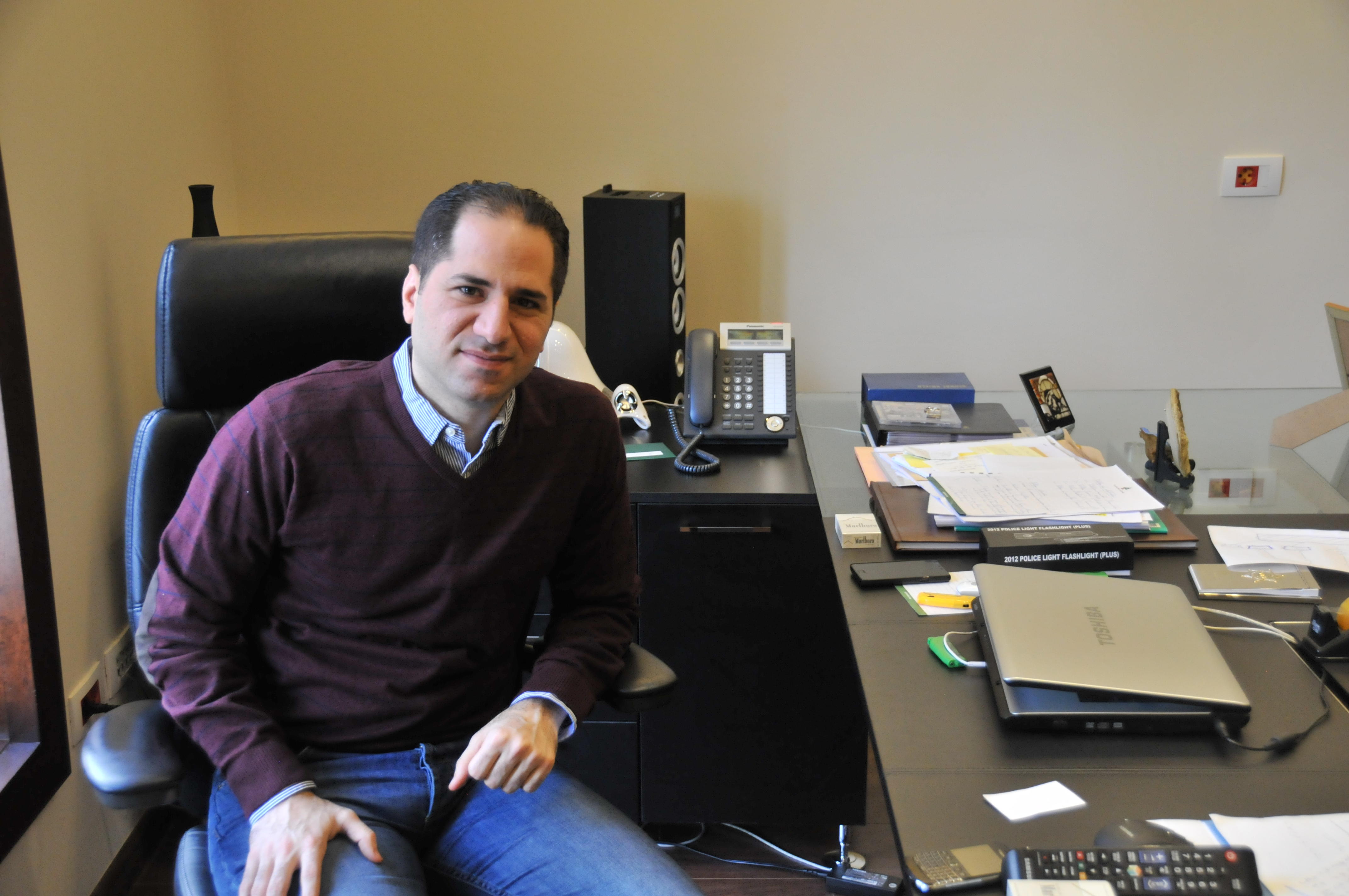
“Like someone who has been in prison for thirty years.” Samy Gemayel. Photo: Michael J. Totten
“Yes, it can change,” he said.
And why shouldn’t it? The syndrome is simple. It’s based on fear, silence, and punishment. If the United States pressures Lebanon to negotiate with Israel, the Lebanese will at least be able to discuss the fact that they’re being pressured by the United States to negotiate with Israel. And those who think it’s a fine idea will be given international cover. Just as the red line was imposed from the outside, it can be erased from the outside.
Indeed, powerful Lebanese people are walking right up to the red line right now without pressure from outside.
“Remember,” Gemayel said, “when Hezbollah had indirect talks with Israel through the Germans? I went on TV. It was the first time someone talked about this. I said, ‘how come Hezbollah is allowed to talk to the Israelis indirectly through the Germans to get their prisoners back while the Lebanese state is not allowed to do indirect talks like Hezbollah to get back Shebaa Farms?’”
Hezbollah didn’t respond to that challenge. What could they possibly say?
“We really don’t have anything to hide,” says Samy Gemayel. “We believe there should come a day when we negotiate with Israel in order to have permanent peace on our southern borders. We should end this. We should have stability.”The Gemayels and their party were allied with Israel during Lebanon’s civil war. Samy Gemayel’s uncle, Bashir, swore to vanquish Yasser Arafat’s Palestinian state-within-a-state in southern Lebanon, to throw out the Syrian army, and to sign a peace treaty with Jerusalem. Naturally the Israelis backed him to the hilt in 1982 when they invaded and he was elected president.
According to Thomas Friedman’s account in his book, From Beirut to Jerusalem, one of the last things Bashir Gemayel ever said was, “To all those who don’t like the idea of me as president, I say, they will get used to it.” A few moments later, he was blown to pieces by terrorists from the Syrian Social Nationalist Party.
Bashir’s brother Amine replaced him as president. Lebanon’s civil war raged on—it was only half-way through at that point. And the Kataeb’s alliance with Israel began to wane. Jerusalem’s peace partner was dead and replaced with his more cautious brother. Hezbollah was on the rise in the south—from which Arafat’s PLO had been evicted—and in the northern Bekaa Valley. The Assad regime’s military forces weren’t planning to leave Lebanon anytime soon. The Israeli dream of a friendly and terrorist-free Lebanon was premature and would have to be deferred for a generation at least.
I asked Samy Gemayel about his party’s former alliance with Israel, and I did it carefully. “You can answer me twice,” I said, “on the record and off the record. I can turn off my voice recorder because I want to know what you really think, but I also want to know what you would say publicly.”
“Let me be very clear,” he said, “and this is my answer publicly and non-publicly. We believe we had no choice back then but to have an alliance with Israel. I’ve said it on TV. And if we find ourselves in the same position today, we would do it again. I also said that on TV. We couldn’t do anything else. The Syrians were against us. The Palestinians were against us. The Lebanese Muslims were against us. The entire Arab world was against us. What were we supposed to do? Say, please kill us? We would take support from anywhere, and the only country that supported us at that time was Israel. We really don’t have anything to hide on this matter. And we believe that there should come a day when we negotiate with Israel on all pending and disputed issues in order to have permanent peace on our southern borders. We should end this. We should have stability.”
He went on. I thought he might be careful and cautious, that he’d rather discuss something else, but no, he walked right up to the red line and told me I could print all of it.
“There is no excuse,” he continued, “why Egypt is allowed to have a peace treaty with Israel while we cannot negotiate for an armistice. Why can Jordan have a peace treaty while we also cannot negotiate for an armistice? Even Syria, without a peace treaty, has had peaceful relations with Israel since 1974. Why can’t we? More, why can Hezbollah, a paramilitary group, negotiate with Israel twice through German mediators in 2004 and 2009 to release its prisoners, and the official Lebanese state is not allowed to?”

Memorial for the assassinated Prime Minister Rafik Hariri. Photo: Wikimedia
When I asked how many people he sensed agreed with him, he put it this way: “We have to take into consideration that a lot of people were killed here by Israel. We have to be very careful when we talk about it because people died. But it’s the same for Syria. Syria also killed a significant number of Lebanese from 1976 onward; more than what Israel killed, it may be argued. So if you want to have this attitude toward Israel, why not have the same toward Syria? Syria has done more harm to Lebanon than Israel.”
There are two reasons it’s considered acceptable to be a Lebanese ally of Syria but not of Israel. First of all, Syria is a “brother” Arab country. And second, Syria conquered Lebanon, transformed its political system, and still has agents and proxies inside.
“We just want peace in this country,” Gemayel said. “We want to build this country that has been destroyed for the last forty years. And we can’t build this country as long as it is at war. We don’t want to be at war anymore. It’s as simple as that. The future should be a future of peace.”
The Future Movement party, founded by the late Rafik Hariri—who was assassinated in 2005 by the Syrians and Hezbollah, kicking off the Cedar Revolution—is the primary political vehicle for Lebanon’s Sunni population. It gets roughly 90 percent of the Sunni vote in elections. (The local Muslim Brotherhood is an irrelevant fringe party.) Hariri essentially agreed with Gemayel, and so does his son and successor, former prime minister Saad Hariri. The Future Movement, as its name implies, looks to the future and not the past. Its ideology is one of liberalism and capitalism, which cannot flourish in war zones. Neither Hariri campaigned for peace with Israel, but neither waged war on Israel either. Instead, both struggled against Israel’s regional enemies. And they paid the price, the elder Hariri with his life and the younger with self-imposed exile in France.
I had dinner with Saad Hariri shortly before he became prime minister in 2009, and though I can’t quote him directly because our conversation was off-the-record, I can say that this man, who is the leader of Lebanon’s Sunnis, isn’t an obstacle to peace.What about Lebanon’s Shia? They make up roughly a third of the population, and roughly two-thirds of them are at least nominal supporters of Hezbollah. But another third or so are staunchly opposed to the party.
Lokman Slim is the Shia community’s most prominent anti-Hezbollah activist. He lives right under the Party of God’s nose in the dahiyeh, Hezbollah’s stronghold in Beirut’s southern suburbs. He has dedicated his life to building a liberal alternative to the self-proclaimed “party of God.” His opinions are his own. Politically, he’s a minority figure. But he’s not at war with his community. He is at war with its dominant political party, which is not the same thing at all.
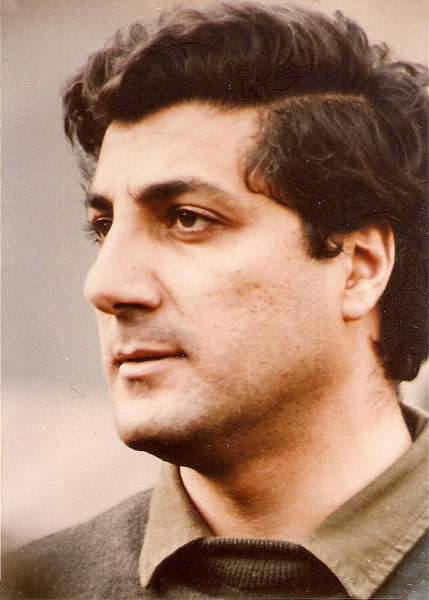
Lebanon’s lost hope.
Prime Minister Bashir Gemayel.
Photo: Wikimedia
Prime Minister Bashir Gemayel.
Photo: Wikimedia
How many people in the Shia community agree with what he is saying?
“Much more than you think,” he said.
Lebanon is one of the few Middle Eastern countries not ruled by a monarch that never went through a socialist phase. Even Israel went through a socialist phase, though fortunately not on the Arab or Soviet model. Capitalism and trade come naturally to the people of Lebanon. They don’t have much choice. It’s a small country without any resources. Even after decades of military occupation and war, Lebanon is more prosperous than the other resource-poor Arab countries. Wouldn’t its economy heat up if Beirut had a peace treaty and free trade with Israel?
“Obviously,” Slim said. “We should take advantage of the fact that people want peace. Don’t only listen to [Hezbollah leader] Hassan Nasrallah. Talk to people in the street. The people in the south will tell you they want peace while Nasrallah always says he wants war. Of course the old woman in her shop selling cigarettes and sandwiches to UNIFIL soldiers wants to expand her small business.”
He wasn’t referring to any old woman in particular, but there are plenty of merchants in the south who have done business with the Israelis, and not all of them are in their seventies. When Israeli soldiers invaded southern Lebanon in 1982 to demolish Yasser Arafat’s PLO statelet, the indigenous Shia population hailed them as liberators. Hezbollah doesn’t talk about this, and the party is extremely unhappy when anyone else brings it up, but everyone in Lebanon knows it’s true.
At the time, it did not even occur to Lebanon’s Shia that Israel was their enemy. Their foe was an ancient one, which had been kicking them around since just after Islam was created—the Sunnis. Palestinians are overwhelmingly Sunni, and in the 1970s their construction of a belligerent mini-state in the Shia heartland of south Lebanon was a most unwelcome development.
“The Shia of the southern hinterland,” wrote Johns Hopkins professor Fouad Ajami, who himself hails from that part of Lebanon, “had endured Palestinian power, the rise in their midst of a Palestinian state within a state. The Palestinian gunmen and pamphleteers had had the run of that part of the country. Arab nationalists in distant lands had hailed that Palestinian sanctuary; Arab oil wealth had paid for it. The Shia relief in 1982, when Israel swept into Lebanon and shattered that dominion, was to the Arab nationalists proof that the Shia stepchildren were treasonous. Then a Shia militant movement, Hezbollah, rose to challenge Israel. Its homicide bombers, its policies of ‘virtue and terror,’ acquitted the Lebanese Shia in Arab eyes.”
But it took years for Hezbollah to convince the average Lebanese Shia civilian that they were the good guys. If the Israelis had not stayed too long in southern Lebanon—the occupation lasted almost two decades—Hezbollah would have had a much harder time getting started.
“The Shia peasants denounced Hezbollah to the Israelis,” Slim said. “They would go to the Israeli soldiers and report strange things that were happening. Hezbollah spent a long time changing the mentality of these people.”
If Hezbollah is weakened or collapses entirely, this mentality should eventually revert to the norm, because Jews have never been the principal enemy of the Shia. That dubious honor has always gone to the Sunnis. And as Ajami points out, the Shia “resistance” against the “Zionist entity” was from the start as much about acquiring status and respect, and thus acceptance, from the Sunnis as it was about Israel.
“Go to the south,” Slim said, “and ask people if they want a new war, another divine victory.”
I have, and they say no. Lebanon’s Shia are simply not interested in war any more. The Second Lebanon War in 2006 was the high water mark in support for Hezbollah aggression. Nasrallah himself was forced to admit it. He all but apologized to his community in the smoldering aftermath, saying, “If I knew the process of capturing [Israeli soldiers], even with a one percent probability, would lead to a war like this, and then if you asked me would you go and capture them, my answer would be, of course, no—for humanitarian, moral, social, and security reasons.”
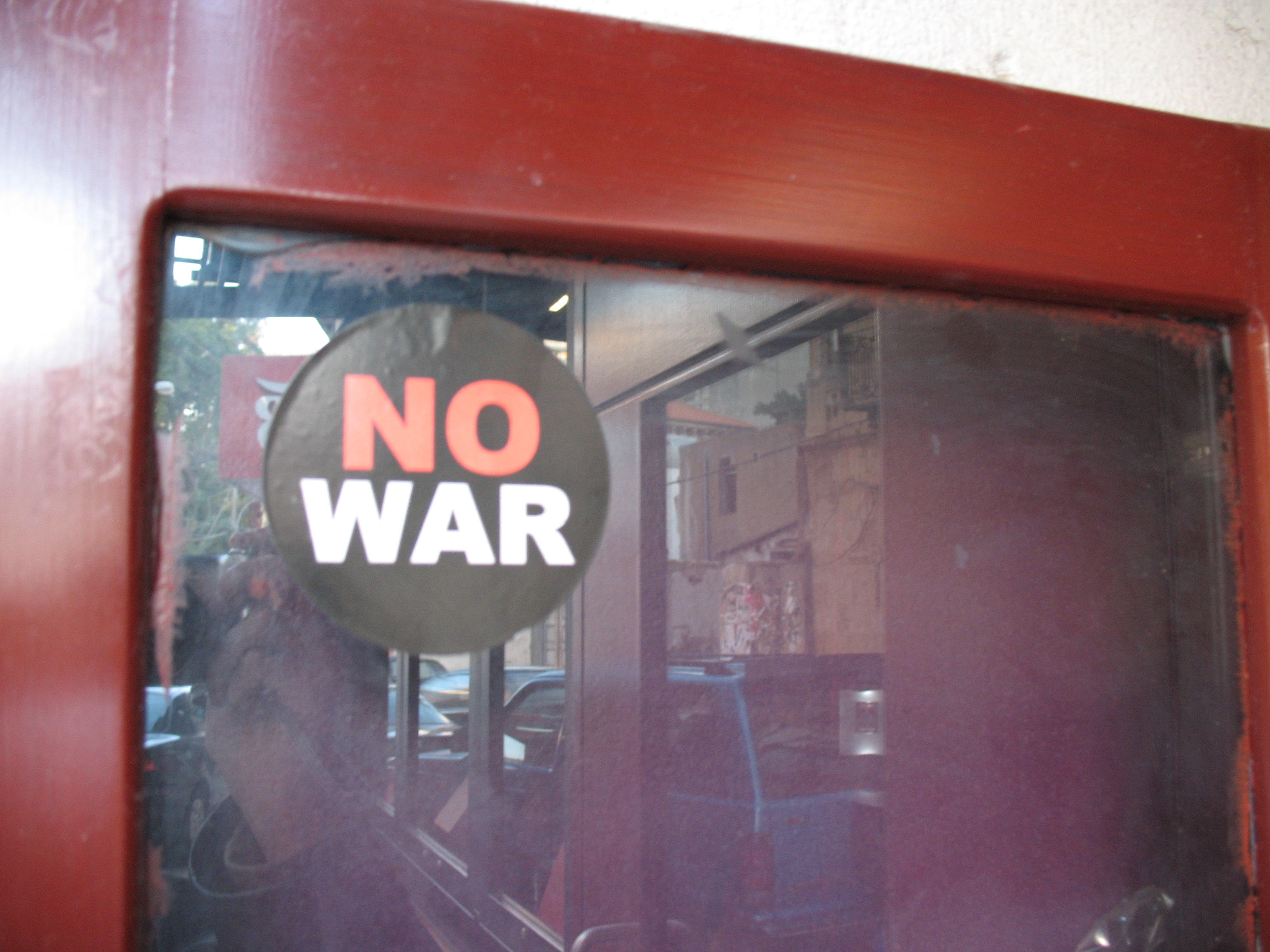
Sign in East Beirut. Photo: Michael J. Totten
“They want a cold peace,” Slim said. “Right now they are ideologically conditioned. Don’t forget all the anti-Jewish propaganda. Because we’re not just talking about Israel. Anti-Semitism has been rooted in our culture from the nineteenth century up through Hezbollah. So people in the south just want a cold peace. They will not mind taking advantage of a warmer peace, but don’t involve them in its creation.”
Hanin Ghaddar, the managing editor of the online magazine NOW Lebanon, is another liberal Shia from the south who dissents from the mainstream opinion in her community, and she’s free to say things Hezbollah and its supporters will not.
“People had different opinions,” she told me, “but the general impression was that the 1982 Israeli invasion was great. The Israelis overstayed their welcome, but they were really welcome at the beginning. Everybody was very happy. I remember it. A lot of my relatives were happy, including my father. We had no problems with the Israelis.”
But they expected the Israelis to leave. The strangers from the south were welcome as liberators, but not as occupiers. If they had left, Hezbollah would have had a much harder time establishing itself. She concurs with Lokman Slim. Hezbollah, she said, “used the occupation to rally the people around them.”
The Israelis should have left sooner, but the error is perhaps understandable. They were welcomed at first, so they thought they’d be welcome to stay. And they wanted to stay to prevent another hostile group like the PLO establishing itself on the border. Obviously, it didn’t work out.
But anti-Zionism was not an indigenous belief in this part of Lebanon. The Israelis didn’t foresee that Iran’s revolutionary new government would export its ideology to its distant coreligionists, partly because Iran’s ambitions in the Levant had not yet taken shape, and also because the Shia history of dispossession and neglect was not—and still is not—widely understood in Israel. The Iranians understood it, however, because it is their story as well. The rise of Hezbollah was welcome among the Shia for the exact same reason the Israeli invasion was welcome—both promised relief from Sunni oppression, both ancient and modern, both real and imagined.

Dreaming of a better Lebanon. Beirut at Night. Photo: Charles Nouyrit / Flickr
“They’re very flexible, she said. “The war with Israel ended in 2006. Everybody knows that. It’s not going to happen again, not if Israel doesn’t start it. Hezbollah cannot strike first again. They don’t have enough support. For the people, the war is over. They’re convinced Israel isn’t going to strike unless Hezbollah starts something.”
None of this means peace and normal relations are around the next corner, but what about relative peace and quiet?
“There is a way,” said Eli Khoury, CEO of the M&C Saatchi advertising company in the Middle East and co-founder of the Lebanon Renaissance Foundation. “Hezbollah has already agreed in principle to return to a non-aggression treaty, the original armistice that has been in place for more than 60 years. [Druze leader] Walid Jumblatt campaigns for it. [Former prime minister] Fouad Seniora also campaigned for it.”He’s referring to the armistice the Lebanese government and the new State of Israel signed at the end of the first Arab-Israeli war in 1949. Lebanon was hardly even involved in that war, and hasn’t actively waged war against Israel since. The Israelis have fought in Lebanon, but not against the Lebanese army or government. Their enemies were Palestinian and Iranian-backed terrorist organizations. In the middle of the 2006 war, Lebanese and Israeli military officers sat down over tea and worked out a plan to ensure that neither side accidentally shot at the other.
“Everyone is at least paying lip service to neutrality now,” Khoury said. “It used to be only the Christians who said they wanted neutrality. So today at least lip service is paid by every party, even the harshest, to neutrality, decentralization, border control, cleaning up agreements with Syria, and a return to the armistice with Israel.”
It’s true that the Christians have always wanted Lebanon to be neutral in the Arab-Israeli conflict. The Shias wanted it, too, until 1982. Back then it was only the Sunnis who wanted Lebanon involved. It was they who embraced Egyptian tyrant Gamal Abdel Nasser’s pan-Arabism and invited the PLO into the country.
Since then, however, the Sunnis in Lebanon have quietly moved on from the conflict with Israel, just as Sunni Arabs have moved on pretty much everywhere else. For them, the war ended with the PLO’s last stand in 1982. As for the rest of the region, not a single Sunni Arab government has actively participated in a full-blown war against Israel since the 1973 Yom Kippur War. Lebanon’s Sunnis, in moving on, are hardly unique. Indeed, they have even more reason to move on than do Sunnis in places like Tunisia and Morocco, because Tunisia and Morocco don’t get torn to pieces when the rocket launchers are fired up. Contrary to popular belief in some quarters, most Lebanese people do not enjoy getting blown up and shot at.
“The most recent study we commissioned,” Khoury said, “and it was thorough, we surveyed 4,000 people, showed that 95 percent of the Sunnis don’t care about Salafism or the Arab-Israeli conflict anymore. They’re interested in other things. You have to remember that Saad Hariri’s party is by far the most popular movement among the Sunnis.”
Only Hezbollah keeps the fight alive, and historically speaking, the default position of their constituents has been radically different from what it is now. Hezbollah’s sponsors in Syria and Iran are still standing, and it might take a generation for attitudes to change even after guns, money, and ideology stop coming in from Tehran and Damascus. But it should be clear by now there’s nothing eternal about the attitudes and behavior of Israel’s northern neighbor. And if it’s still too soon for optimism, it is not too soon to say that there appears to be at least some light at the end of the tunnel.
HOT ISSUE TAYLOR SWIFT, TAYLOR'S EX BOYFRIENDS!
Taylor Swift
has stated that she has written songs about all of her ex-boyfriends,
and that they are the greatest inspiration for her. So this is a list of
who was the inspiration for what song, what interviews she talked about
it in, and any other relevant information.
Boyfriends
- The song Tim McGraw was inspired by an ex-boyfriend named Brandon Borello. Their relationship ended because he had to go to college. Taylor told USA Today, "He bought the album [Taylor Swift] and said he really loved it, which is sweet. His current girlfriend isn't too pleased with it, though." It was named after a musician whose songs she liked. He was going away to college so she wanted to write him something to remember her by.
- Picture to Burn was written about an unnamed ex-boyfriend, whom she calls a redneck, and says he never let her drive his pick-up truck.
- Teardrops on My Guitar was written about a boy she liked, whom she never actually dated. "Drew was a real person!" she tells. Drew was surprised when he heard his name in the song. "I never knew she liked me" Drew says. Taylor stated that two years after the song came out Drew showed up at her house and asked her on a date. She declined. "It was the perfect fairytale ending but a little too late."
- Should've Said No was about an ex-boyfriend that cheated on her. The boyfriend's name was Sam Armstrong, and, in the CD booklet, every S, A, and M was capitalized if it was in the correct order.
- Joe Jonas broke up with her over the phone, which is something she has complained about on Ellen DeGeneres' Show and elsewhere. She got her record company to let her record a song about it, to add at the last minute to her album. Forever & Always is the name of that song. She also wrote Last Kiss about him and Better than Revenge is about his ex-girlfriend, Camila Belle.
- Taylor Lautner became her boyfriend after they met on set for the film Valentine's Day. Their relationship was popularly known as Taylor Squared. They broke up in early 2010. She mentioned going to a hockey game with him during her October 29th 2009 appearance on The Ellen Show. According to MTV he was more into her than she was into him, he going everywhere he could to see her, but it was not working out. [1] They have apparently decided to just be friends.
- The song, Back to December is suspected to be about Taylor Lautner. The song is an apology to him. Some of the lyrics go..." Your guard is up and I know why. Because the last time you saw me is still burned in the back of your mind ...you gave me roses and I left them there to die. So this is me swallowing my pride, standing in front of you saying I'm sorry for that night. And I go back to December all the time. You gave me all your love and all I gave you was goodbye." At the end of the song she asks for his forgiveness and hints to the fact she wants to be with him again. The couple hasn't reunited and at the recent American Music Awards Swift performed the song and at the end added "and he said..it's too late to 'pologize" from popular song "Apologize" by the band One Republic. [2] She is alluding to the parody video Taylor Lautner made for "Apologize". [3] Time magazine listed this is one of the top apologies of 2010. [4]
- Jake Gyllenhaal reported spent $160,000 to have her flown over on a private jet for a date. [5] He later broke up with her through text. We Are Never Ever Getting Back Together, State of Grace, All Too Well, Girl at Home and The Moment I Knew are rumored to be about him.
- The songs Dear John and I Knew You Were Trouble are rumored to be about her ex-boyfriend John Mayer, whom she had a fling with at one time.
- The song Enchanted is about Adam Young of Owl City but she never dated him, although he did state his interest in her. [6]
- Harry Styles
- Conor Kennedy
- To learn about Taylor's current boyfriend, please read Current love interes
TEEN'S HEALTH FULL KNOWLEDGE ABOUT FAT AND KALORIES
From all you hear, you'd think fat and calories are really bad for
you. It's true that many people are eating more fat and calories than
they need. But we all require a certain amount of fat and calories in
our diets to fuel our growth and activities — everything from solving a
math problem to racing up and down the soccer field. So what's the truth
on fat and calories?
A calorie is a unit of energy that measures how much energy food provides to the body. The body needs calories to function properly.
When you start looking at food labels, you may be surprised at some of the serving sizes. For example, on the labels of six cold breakfast cereals, the serving size ranges from ½ cup to 1¾ cups. You would have to more than triple the smallest serving size to compare the calories in that cereal with the calories in the cereal with the largest serving size (1¾ cups). A small bag of corn chips may contain two or more servings — although most people would eat the entire bag! That's why it's always important to check the serving size of all foods on the label.
Light (lite) and reduced-fat foods may still be high in fat. The requirement for a food to be labeled light (lite) is that it must contain 50% less fat or one third fewer calories per serving than the regular version of that food. Foods labeled reduced fat must contain 25% less fat per serving than the regular version. But if the regular version of a particular food was high in fat to begin with, a 25% to 50% reduction may not lower the fat content enough to make it a smart snacking choice. For example, the original version of a brand of peanut butter contains 17 grams of fat and the reduced fat version contains 12 grams. That's still a lot of fat!
It's helpful to know how many of the calories you're getting come from fat. The 2010 U.S. dietary guidelines recommend that children and teens ages 4-18 get between 25% to 35% of their daily calories from fat. But food labels don't always show the percentage of fat in a food. It is easy to calculate, though. Divide the number of calories from fat by the number of total calories and multiply by 100:
 For example, if a 300-calorie food has 60 calories from fat, you
divide 60 by 300 and then multiply by 100. The result shows that food
gets 20% of its calories from fat:
For example, if a 300-calorie food has 60 calories from fat, you
divide 60 by 300 and then multiply by 100. The result shows that food
gets 20% of its calories from fat:
That's why one food with the same serving size as another may have far more calories. A high-fat food has many more calories than a food that's low in fat and higher in protein or carbohydrates.
For instance, a ½-cup serving of vanilla ice cream contains:
But let's face it, who's going to choose a heaping bowl of cooked carrots over ice cream on a hot summer day? It all comes down to making sensible food choices most of the time. The goal is to make tradeoffs that balance a higher-fat food with foods that are lower in fat to keep the fat intake at about 30% for the day. So if you really want that ice cream, it's OK once in a while — as long as you work in some lower-fat foods, like carrots, that day.
Saturated and trans fats are solid at room temperature — like butter, shortening, or the fat on meat. Saturated fat comes mostly from animal products, but some tropical oils, like palm kernel oil and coconut oil, also contain saturated fat. Small amounts of naturally occurring trans fat are also found in whole dairy and meat products.
Trans fats are often found in packaged baked goods, like cookies or crackers. They also may be found in fried foods like french fries and doughnuts. Because saturated fat and trans fat raise blood cholesterol levels, increasing a person's risk of developing heart disease, a gram of one of these fats is worse for a person's health than a gram of unsaturated fat.
One of the most common sources of trans fat in today's foods is partially hydrogenated vegetable oil. Hydrogenation is a process that changes liquid oils into a solid form of fat by adding hydrogen. This process allows these fats to keep for a long time without losing their flavor or going bad.
Unsaturated fats are liquid at room temperature. Unsaturated fats can be polyunsaturated or monounsaturated. Polyunsaturated fat is found in soybean, corn, sesame and sunflower oils, or fish and fish oil. Monounsaturated fat is found in olives, olive oil or canola oil, most nuts and their oils, and avocados.
It's a bad idea to try to avoid fat completely, though, especially for teens. A certain amount of fat is necessary for development, especially during puberty when the body grows very quickly.
Fats are also needed to absorb certain vitamins that are essential for proper growth. Vitamins A, D, E, and K are fat soluble, meaning they can only be absorbed if there is fat in a person's diet. Also, body fat cells act as insulation to keep the body warm and help protect and cushion internal organs.
Like fat, you need a certain amount of calories in your diet to fuel your body. In fact, nutritionists do not recommend calorie counting (keeping track of the number of calories in everything that you eat) for teens unless a doctor has specifically recommended it. So if you are concerned about your weight, speak to your doctor.
Maintaining a healthy weight means choosing a variety of foods that are low in fat (especially saturated and trans fats) and added sugars. Think about substitutes for foods that have a lot of sugar, fat, or calories. For example, you may want to drink water or skim milk instead of soft drinks, or choose mustard instead of mayonnaise on your sandwich.
Being aware of the amount of fat and calories you eat makes sense, as long as you eat a balanced diet. Establishing sensible eating habits, choosing foods wisely, and exercising regularly are the keys to long-term good health.
Reviewed by: Mary L. Gavin, MD
Date reviewed: November 2011
Originally reviewed by: Jessica Donze Black, RD, CDE, MPH

What Are Fat and Calories?
Fats, or lipids, are nutrients in food that the body uses to build cell membranes, nerve tissue (like the brain), and hormones. The body also uses fat as fuel. If fats that a person has eaten aren't burned as energy or used as building blocks, they are stored by the body in fat cells. This is the body's way of thinking ahead: By saving fat for future use, it plans for times when food might be scarce.A calorie is a unit of energy that measures how much energy food provides to the body. The body needs calories to function properly.
Food Labels: Calories
Food labels list calories by the amount in each serving size. Serving sizes differ from one food to the next, so to figure out how many calories you're eating, you'll need to do three things:For example, a bag of cookies may list three cookies as a serving size. But if you eat six cookies, you are really eating two servings, not one. To figure out how many calories those two servings contain, you must double the calories in one serving.
- Look at the serving size.
- See how many calories there are in one serving.
- Multiply the number of calories by the number of servings you're going to eat.
When you start looking at food labels, you may be surprised at some of the serving sizes. For example, on the labels of six cold breakfast cereals, the serving size ranges from ½ cup to 1¾ cups. You would have to more than triple the smallest serving size to compare the calories in that cereal with the calories in the cereal with the largest serving size (1¾ cups). A small bag of corn chips may contain two or more servings — although most people would eat the entire bag! That's why it's always important to check the serving size of all foods on the label.
Food Labels: Fat
When it comes to fat, labels can say many things. Low fat, reduced fat, light (or lite), and fat free are common terms you're sure to see on food packages. The U.S. government has strict rules about the use of these phrases: By law, fat-free foods can contain no more than 0.5 grams of fat per serving. Low-fat foods may contain 3 grams of fat or less per serving. Foods marked reduced fat and light (lite) are a little trickier, and you may need to do some supermarket sleuthing.Light (lite) and reduced-fat foods may still be high in fat. The requirement for a food to be labeled light (lite) is that it must contain 50% less fat or one third fewer calories per serving than the regular version of that food. Foods labeled reduced fat must contain 25% less fat per serving than the regular version. But if the regular version of a particular food was high in fat to begin with, a 25% to 50% reduction may not lower the fat content enough to make it a smart snacking choice. For example, the original version of a brand of peanut butter contains 17 grams of fat and the reduced fat version contains 12 grams. That's still a lot of fat!
It's helpful to know how many of the calories you're getting come from fat. The 2010 U.S. dietary guidelines recommend that children and teens ages 4-18 get between 25% to 35% of their daily calories from fat. But food labels don't always show the percentage of fat in a food. It is easy to calculate, though. Divide the number of calories from fat by the number of total calories and multiply by 100:
4, 4, and . . . 9?
The calories in food come from carbohydrates, proteins, and fats. A gram of carbohydrate contains 4 calories. A gram of protein also contains 4 calories. A gram of fat, though, contains 9 calories — more than twice the amount of the other two.That's why one food with the same serving size as another may have far more calories. A high-fat food has many more calories than a food that's low in fat and higher in protein or carbohydrates.
For instance, a ½-cup serving of vanilla ice cream contains:
- 178 total calories
- 2 grams of protein (2 grams times 4 calories = 8 calories from protein)
- 12 grams of fat (12 grams times 9 calories = 108 calories, or 61%, from fat)
- 15.5 grams of carbohydrate (15.5 grams times 4 calories = 62 calories from carbohydrate)
- 36 total calories
- 1 gram of protein (1 gram times 4 calories = 4 calories from protein)
- 0 grams of fat (0 grams times 0 calories = 0 calories from fat)
- 8 grams of carbohydrate (8 grams times 4 calories = 32 calories from carbohydrate)
But let's face it, who's going to choose a heaping bowl of cooked carrots over ice cream on a hot summer day? It all comes down to making sensible food choices most of the time. The goal is to make tradeoffs that balance a higher-fat food with foods that are lower in fat to keep the fat intake at about 30% for the day. So if you really want that ice cream, it's OK once in a while — as long as you work in some lower-fat foods, like carrots, that day.
Not All Fats Are the Same
Although all types of fat have the same amount of calories, some are more harmful to your health than others. Two of the most harmful fats are saturated fat and trans fat. Both of these fats can increase a person's risk of heart disease. Food labels show the amounts of saturated fats and trans fats in a particular food.Saturated and trans fats are solid at room temperature — like butter, shortening, or the fat on meat. Saturated fat comes mostly from animal products, but some tropical oils, like palm kernel oil and coconut oil, also contain saturated fat. Small amounts of naturally occurring trans fat are also found in whole dairy and meat products.
Trans fats are often found in packaged baked goods, like cookies or crackers. They also may be found in fried foods like french fries and doughnuts. Because saturated fat and trans fat raise blood cholesterol levels, increasing a person's risk of developing heart disease, a gram of one of these fats is worse for a person's health than a gram of unsaturated fat.
One of the most common sources of trans fat in today's foods is partially hydrogenated vegetable oil. Hydrogenation is a process that changes liquid oils into a solid form of fat by adding hydrogen. This process allows these fats to keep for a long time without losing their flavor or going bad.
Unsaturated fats are liquid at room temperature. Unsaturated fats can be polyunsaturated or monounsaturated. Polyunsaturated fat is found in soybean, corn, sesame and sunflower oils, or fish and fish oil. Monounsaturated fat is found in olives, olive oil or canola oil, most nuts and their oils, and avocados.
Fat and Calories in a Healthy Diet
Fats should be eaten in moderation. The American Heart Association recommends that people get as much of their daily fat intake as possible from unsaturated fats and that they limit saturated fats and trans fats.It's a bad idea to try to avoid fat completely, though, especially for teens. A certain amount of fat is necessary for development, especially during puberty when the body grows very quickly.
Fats are also needed to absorb certain vitamins that are essential for proper growth. Vitamins A, D, E, and K are fat soluble, meaning they can only be absorbed if there is fat in a person's diet. Also, body fat cells act as insulation to keep the body warm and help protect and cushion internal organs.
Like fat, you need a certain amount of calories in your diet to fuel your body. In fact, nutritionists do not recommend calorie counting (keeping track of the number of calories in everything that you eat) for teens unless a doctor has specifically recommended it. So if you are concerned about your weight, speak to your doctor.
Maintaining a healthy weight means choosing a variety of foods that are low in fat (especially saturated and trans fats) and added sugars. Think about substitutes for foods that have a lot of sugar, fat, or calories. For example, you may want to drink water or skim milk instead of soft drinks, or choose mustard instead of mayonnaise on your sandwich.
Being aware of the amount of fat and calories you eat makes sense, as long as you eat a balanced diet. Establishing sensible eating habits, choosing foods wisely, and exercising regularly are the keys to long-term good health.
Reviewed by: Mary L. Gavin, MD
Date reviewed: November 2011
Originally reviewed by: Jessica Donze Black, RD, CDE, MPH
TEEN'S HEALTH : WHAT IS CELLULITE
Cellulite is the lumpy substance commonly found on the thighs,
stomach, and butt. You may have heard people say it looks like "cottage
cheese." Cellulite is actually a fancy name for collections of fat that
push against the connective tissue beneath a person's skin. This makes
the surface of the skin pucker and look lumpy.
You can check to see if you have cellulite by pinching the skin
around your upper thigh. If it looks a bit lumpy, you probably have it.
If you do have cellulite, you're definitely not alone: Most girls and
women — and some men — have cellulite.
Several things influence whether a person has cellulite and how much they have. Your genes,
your sex, the amount of fat on your body, your age, and the thickness
of your skin are all associated with the amount of cellulite you have or
how visible it is.
It doesn't matter what causes cellulite, there aren't any miracle products, treatments, or medicines that can make it go away.
Some "treatments" may temporarily reduce the appearance of cellulite.
They won't last, though. For example, fancy salon treatments use deep
massaging to puff up the skin. That can make cellulite look a little
better for a while.
Liposuction (surgery to remove fat) and mesotherapy (injection of
drugs into cellulite) are expensive. But they're not very effective. For
example, liposuction is designed to remove deep fat. But cellulite is close to the skin.
Even top models can have cellulite, but if you have it, you probably
don't like it. Almost everyone wishes that something about their body
was a bit different. This is particularly true during our teens when our
bodies go through all sorts of changes caused by puberty.
If you decide that you want to try to reduce the amount of cellulite
you have, the best thing to do is to decrease excess body fat. If you
think that you are overweight (and your doctor agrees), eat fewer
calories and exercise more.
An exercise routine that combines aerobic exercise with strength training
is the best weapon against cellulite. In the meantime, if you want to
conceal your cellulite, try using a self-tanning product. Cellulite
tends to be a little bit less noticeable on darker skin.
7 Tempat Misterius dan Terlarang di Dunia
RAF Menwith Hill, Inggris
 Tempat ini dikabarkan sebagai markas pengawas terbesar di dunia dan
menjadi pemasok informasi tentang aktivitas teroris bagi Inggris dan
Amerika Serikat. Dikelilingi oleh kawat berduri sepanjang hampir lima
km, RAF Menwith Hill memiliki kemampuan untuk mengakses e-mail,
panggilan telefon dan faks dari seluruh dunia. Tempat ini bahkan baru
dimunculkan di Google Maps beberapa lama setelah melalui proses yang
panjang.
Tempat ini dikabarkan sebagai markas pengawas terbesar di dunia dan
menjadi pemasok informasi tentang aktivitas teroris bagi Inggris dan
Amerika Serikat. Dikelilingi oleh kawat berduri sepanjang hampir lima
km, RAF Menwith Hill memiliki kemampuan untuk mengakses e-mail,
panggilan telefon dan faks dari seluruh dunia. Tempat ini bahkan baru
dimunculkan di Google Maps beberapa lama setelah melalui proses yang
panjang.Bohemian Grove, Amerika Serikat

Sumber: jennyhaniver.com
Lascaux Caves, Prancis

Sumber: nationalgeographic.com
Pine Gap, Australia
Tempat ini mungkin adalah satu-satunya area yang dilarang di Australia. Menjadi markas dari Joint Defence Space Research Facility, kabarnya para pekerja yang ada di tempat ini merupakan gabungan dari anggota militer Australia dan CIA. Sebuah tanda terpampang di tempat ini, bertuliskan "Turn Around Now". Tidak ada yang tahu persis kegiatan apa yang terjadi di Pine Gap, namun ada rumor bahwa tempat ini disibukkan dengan operasi satelit militer.
Metro 2, Rusia

Sumber: gametrailers.com
Room 39, Korea Utara

Sumber: internationalpost.co
Area 51, Amerika Serikat

Sumber: mindcemetery.net
Langganan:
Komentar (Atom)